Dr. Martine Hossaert-McKey
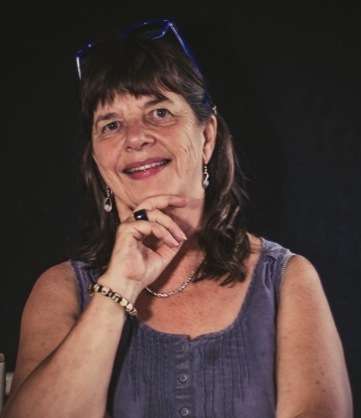
Emeritus Research Director at the CNRS
Brief Summary
Martine HOSSAERT(Senior Scientist, CNRS) is internationally recognized as an outstanding researcher in evolutionary biology. She works at the Center for Functional and Evolutionary Ecology in Montpellier. Her work on plant-insect interactions combines ecology, evolution, and chemistry (125 peer-reviewed articles, H-index = 55, Google Scholar). She served as an adjunct professor at the University of Miami (Florida) for 10 years (1986–1995), where she was a driving force behind the development of a global initiative on the comparative biology of figs, a large pantropical genus of flowering plants. She founded the GDR for Chemical Ecology (2005) and led this group (comprising researchers from 50 laboratories) for 10 years, establishing France as a global leader in chemical ecology. At the CNRS laboratory “Bio-inspired Chemistry and Ecological Innovations” (ChimEco), she participates in the development of nature-based solutions for the restoration of contaminated or degraded sites and the conversion of these pollutants into resources, thereby contributing to the circular economy. She has published 12 books and 15 book chapters on various topics in ecology, biodiversity, and chemical ecology. She is a leader in the coordination, administration, and evaluation of science, both within France and as a representative of France at international United Nations conventions (e.g., IPBES meetings, the Conference of the Parties on Biodiversity). She is a past president of two sections of the CNRS National Scientific Committee (Section 29, evolutionary biology, 2008–2010; CID 52, Human-Environment Interfaces, 2004–2008). These committees are responsible for the evaluation and recruitment of researchers for the CNRS. As scientific deputy director of the CNRS Ecology and Environment division (2010–2020), she held scientific and strategic responsibility for approximately 35 research laboratories (UMRs, “mixed research units”). She also helped develop research strategies and priorities for the Institute and was responsible for major initiatives aimed at sharing knowledge on a wide range of environmental challenges and encouraging the participation of diverse stakeholders in the development of innovative solutions. She served (2018–2019) as scientific coordinator for the French Ministry of Research (MESRI) and the French Ministry of Overseas Territories (MOM), providing expertise on research activities and priorities in French overseas territories, and currently serves as “chargée de mission” for Biodiversity and Overseas Territories at the CNRS Ecology and Environment division. She also represents the CNRS on the National Committee for Biodiversity (CNB), the IPBES, and the Convention on Biological Diversity (CBD). She has directed numerous research programs, including several CNRS Priority Exploratory Programs (PEPS). She has extensive direct experience with the use of digital sequence information in research, as many of her publications employ a variety of DSI (e.g., microsatellite markers, amplified fragment length polymorphisms, gene sequencing) to study the phylogeny, phylogeography, and population genetics of the diverse plant and animal groups she has studied. She has also contributed to capacity building in the use of DSI in research through her supervision of international students from China, Cameroon, Colombia, Gabon, and Senegal. She leads a national group studying policy related to DSI, comprising representatives from the CNRS, the French Academy of Sciences, and ALLENVI (Alliance for the Environment), and is also a member of the DSI International Scientific Network. Her experience makes her uniquely qualified to assess the implications of policy decisions regarding DSI for research and capacity building in ecology and biodiversity.
Based on her proven experience managing large-scale scientific programs, she secured a PEPR (Program for Exploratory Research) from the French government (France 2030)—of which she is one of two scientific directors—on Nature-Based Solutions (SOLU-BIOD: 44.2 million euros over 9 years). The main objective of the PEPR SOLU-BIOD is to propose Nature-Based Solutions (NbS) as a key component of the paradigm shift needed to respond more effectively to the biodiversity crisis and current societal challenges. SOLU-BIOD has been designed as a transformative program to structure and strengthen the French research community on NbS around innovative scientific challenges, with the ultimate goal of unlocking the potential of NbS and paving the way for an ambitious national plan on NbS, generating significant environmental, social, and economic benefits.
Responsibilities
- Project Manager for Biodiversity and Overseas Territories
- Co-leader of the SOLUBIOD PEPR
Discipline
Evolutionary Ecology
Techniques
Chemical Ecology
Molecular markers
Topic
Coevolution
Other keywords
Conservation Biology
Biocultural Interactions