Phytotechnologies Applied to Contaminated Sites and Soils
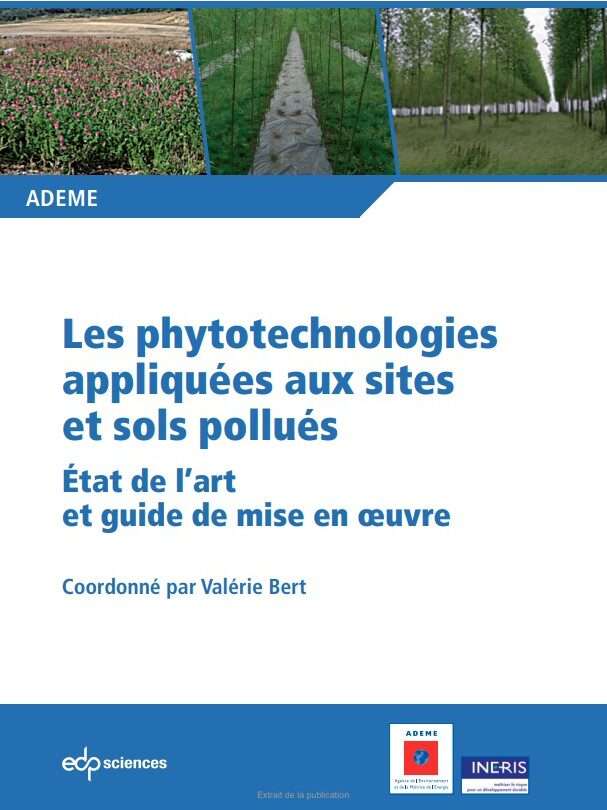
Phytotechnologies are still an emerging field in the markets for soil management and remediation techniques. Yet, in theory, they offer technical and financial solutions that are particularly well-suited to sites with large contaminated areas. On a smaller scale, they can certainly serve as environmentally friendly alternatives for management objectives in contexts where treatment duration is not a constraint. The use of phytotechnologies is often discussed in the context of brownfield or urban site remediation projects, but is too rarely implemented due to a lack of operational experience. However, a number of pilot projects across the country—encouraged and supported by ADEME for several years—now provide insights into various pollution scenarios and offer a concrete understanding of the benefits and limitations of the different solutions applied in the field. This guide provides an overview of the current operational status of phytotechnologies in France. It presents three techniques—phytostabilization, phytoextraction, and phyto/rhizodegradation—from technical, economic, and operational perspectives. It is intended for any project owner or engineering firm interested in using these phytotechnologies.
Authors: Valérie Bert, Anissa Hadj-Sahraoui, Corinne Leyval, Joël Fontaine, Stéphanie Ouvrard
EDP Sciences
2012
Link to the book